


You Are Here:Home > Information dynamics
> Industry trends
- [2025-12-01]
What are the characteristics of anionic fluorocarbon surfactants
Anionic fluorocarbon surfactants, as the core category of fluorocarbon surfactants (molecular structure containing fluorocarbon chain hydrophobic groups+anionic hydrophilic groups), possess three core advantages of "high surface activity, strong stability, and special functional adaptability" due to the special physical and chemical properties of fluorocarbon chains. Their characteristics can be a
- [2025-11-04]
What are the application areas of methyl fluorosilicone oil
Methyl fluorosilicone oil has a wide range of applications, relying on its high temperature resistance, chemical corrosion resistance, weather resistance and other characteristics to meet the special needs of multiple industries.
- [2025-10-10]
In which industries is lithium fluoride applied
Lithium fluoride is an important inorganic compound with high melting point and good chemical stability, widely used in multiple industries, as follows:
- [2025-09-16]
What are the main uses of trifluoropropene
Trifluoropropene (common types such as 1,3,3-tetrafluoropropene, also known as HFO-1234ze); Or 2,3,3,3-tetrafluoropropene, also known as HFO-1234yf, although its name contains "tetrafluoroethylene", it belongs to the core compound of fluorinated propylene and is often classified as a derivative system of trifluoropropene in practical applications. It is a type of fluorinated olefin with low global
- [2025-08-05]
Briefly describe the uses of difluoroethylamine
Difluoroethylamine is a fluorinated organic amine compound, which contains two fluorine atoms and an amino group (- NH ?) in its molecular structure. The unique fluorinated group endows it with special chemical properties, making it important in multiple fields, mainly including the following aspects:
- [2025-07-02]
What are the applications of anionic fluorocarbon surfactants in the field of metal processing
Anionic fluorocarbon surfactants have wide and critical applications in the field of metal treatment due to their unique properties such as high surface activity, chemical resistance, and thermal stability. The following elaborates on multiple process steps:
Website Navigation
Contact Us
- Company Address: Fluorination Technology Park, Changshu City, Jiangsu Province
- Service Hotline: 0512-52818267
- Technical Consultation: 0512-52626090
- Contact phone number: 13601573215
- Company email: xlu113549@gmail.com

Copyright © 2023 Changshu Hongjia Fluorine Technology Co., Ltd All Rights Reserved m.wvchemicalgroup.com 蘇ICP備11048419號-2  蘇公網安備32058102001807號 Technical Support:Lange
蘇公網安備32058102001807號 Technical Support:Lange
+
 wechat number:weiixnhao
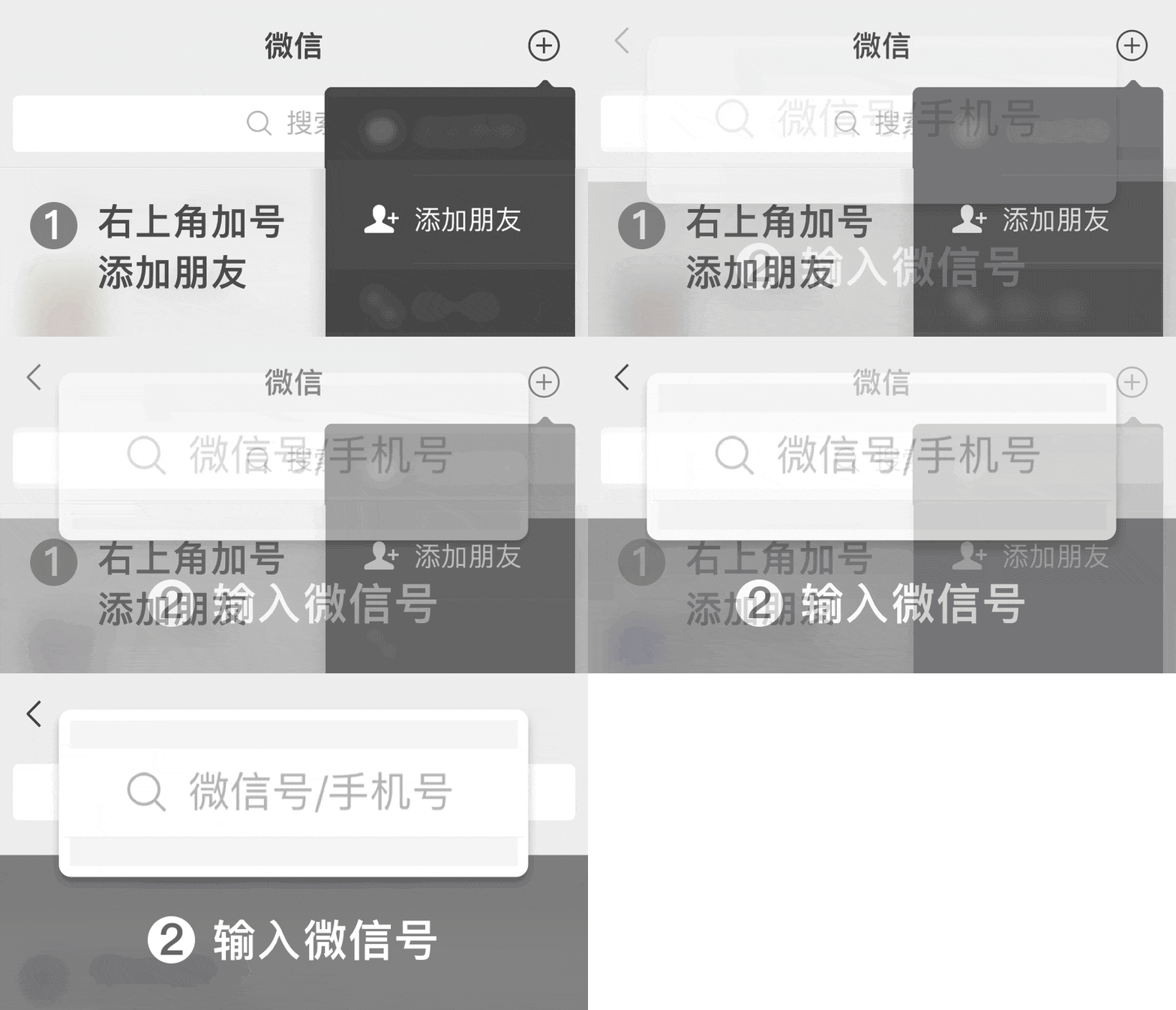
wechat number:weiixnhao
Copy WeChat to WeChat
 Home
Home
 WeChat
 Tell
Tell