


You Are Here:Home > Information dynamics
- [2023-04-26]
Principle and Application of Fluorozirconic Acid Surface Treatment Technology
Principle, Technical Content, and Application of Fluorozirconic Acid Surface Treatment Technology 1. Principle of Fluorozirconic Acid Surface Treatment Technology Zirconization technology uses fluorozirconic acid as the main agent, and utilizes the hydrolysis reaction of fluorozirconic acid to form a chemically stable amorphous oxide conversion film on the surface of the metal substrate; T
- [2023-02-04]
There are several methods for fluorinating organic compounds
There are several methods for fluorination of organic compounds, including selective fluorination. Fluorides of alkali metals or fluorides of antimony, mercury, and silver can be used to convert halogenated alkanes or sulfonic acid esters into fluorinated alkanes. The reaction is generally carried out in an anhydrous polar medium; Antimony pentachloride can also be used as a catalyst for fluorinat
- [2023-02-04]
What is Fluoropolymer
Fluoropolymers, with their excellent properties such as self flame retardancy, self-cleaning, corrosion resistance, and high temperature resistance, are widely used in applications such as construction IT、 The automotive industry plays an increasingly important role and has even become a choice for users in certain fields.
- [2023-02-04]
Unique characteristics of 5 fluorinated polymers
1. Fluorinated polymers have universal chemical compatibility Almost all fluoropolymers have amazing resistance to acids, solvents, and bases, which means they can remain in contact with other substances without any detectable chemical reactions. This makes them materials for applications that require anti-corrosion protection.
- [2023-02-04]
Types of Fluoropolymers
There are many types of commercially available fluoropolymers, including ethylene tetrafluoroethylene copolymer (ETFE), polytetrafluoroethylene (PTFE), fluorinated ethylene propylene copolymer (FEP), perfluoroalkoxy resin (PFA), chlorotrifluoroethylene (PCTFE), ethylene chlorotrifluoroethylene copolymer (ECTFE), polyvinylidene fluoride (PVDF), and polytetrafluoroethylene. The main global suppliers
Website Navigation
Contact Us
- Company Address: Fluorination Technology Park, Changshu City, Jiangsu Province
- Service Hotline: 0512-52818267
- Technical Consultation: 0512-52626090
- Contact phone number: 13601573215
- Company email: xlu113549@gmail.com

Copyright © 2023 Changshu Hongjia Fluorine Technology Co., Ltd All Rights Reserved m.wvchemicalgroup.com 蘇ICP備11048419號-2  蘇公網(wǎng)安備32058102001807號 Technical Support:Lange
蘇公網(wǎng)安備32058102001807號 Technical Support:Lange
+
 wechat number:weiixnhao
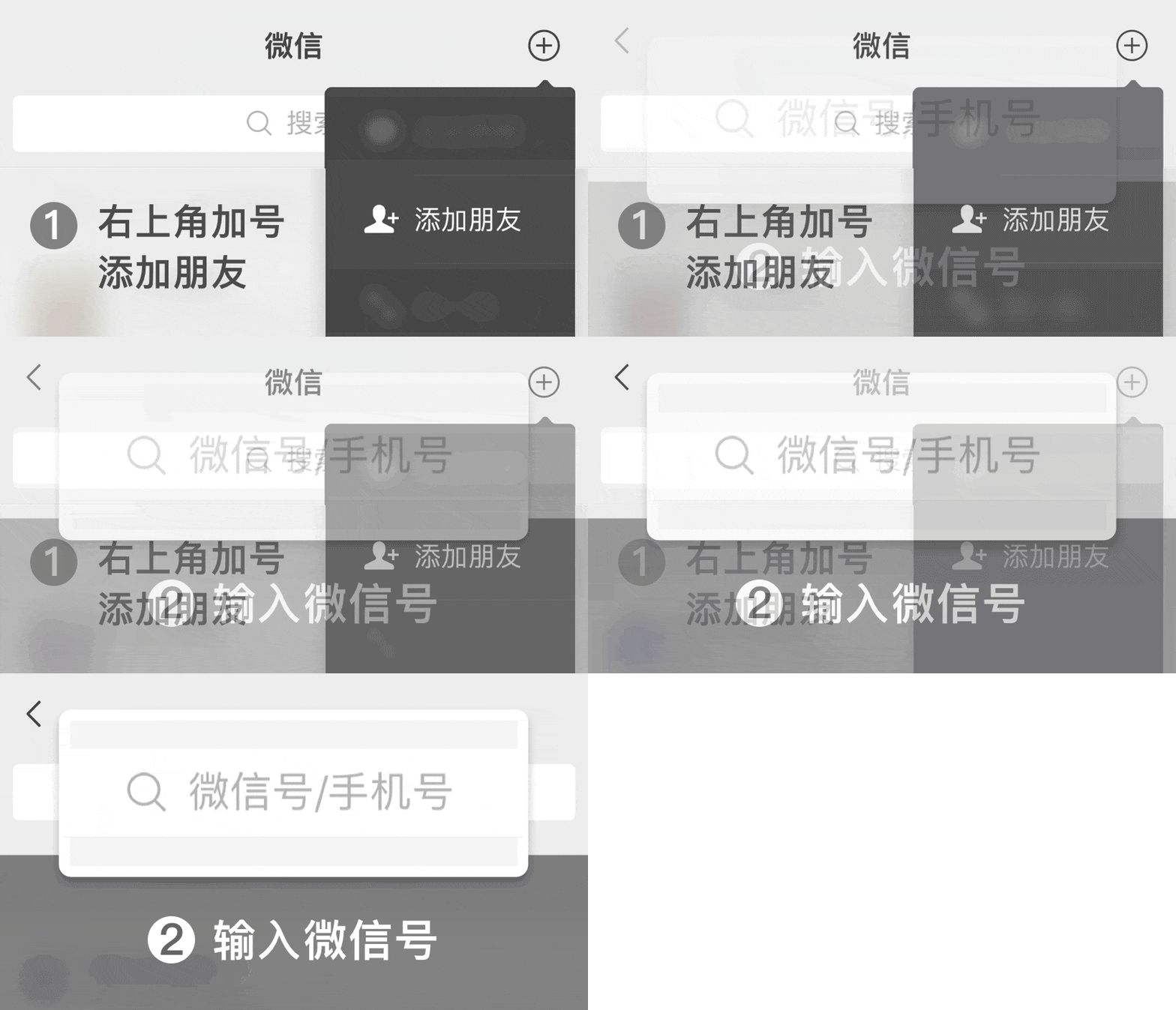
wechat number:weiixnhao
Copy WeChat to WeChat
 Home
Home
 WeChat
 Tell
Tell